
The Polish Hunting Spaniel
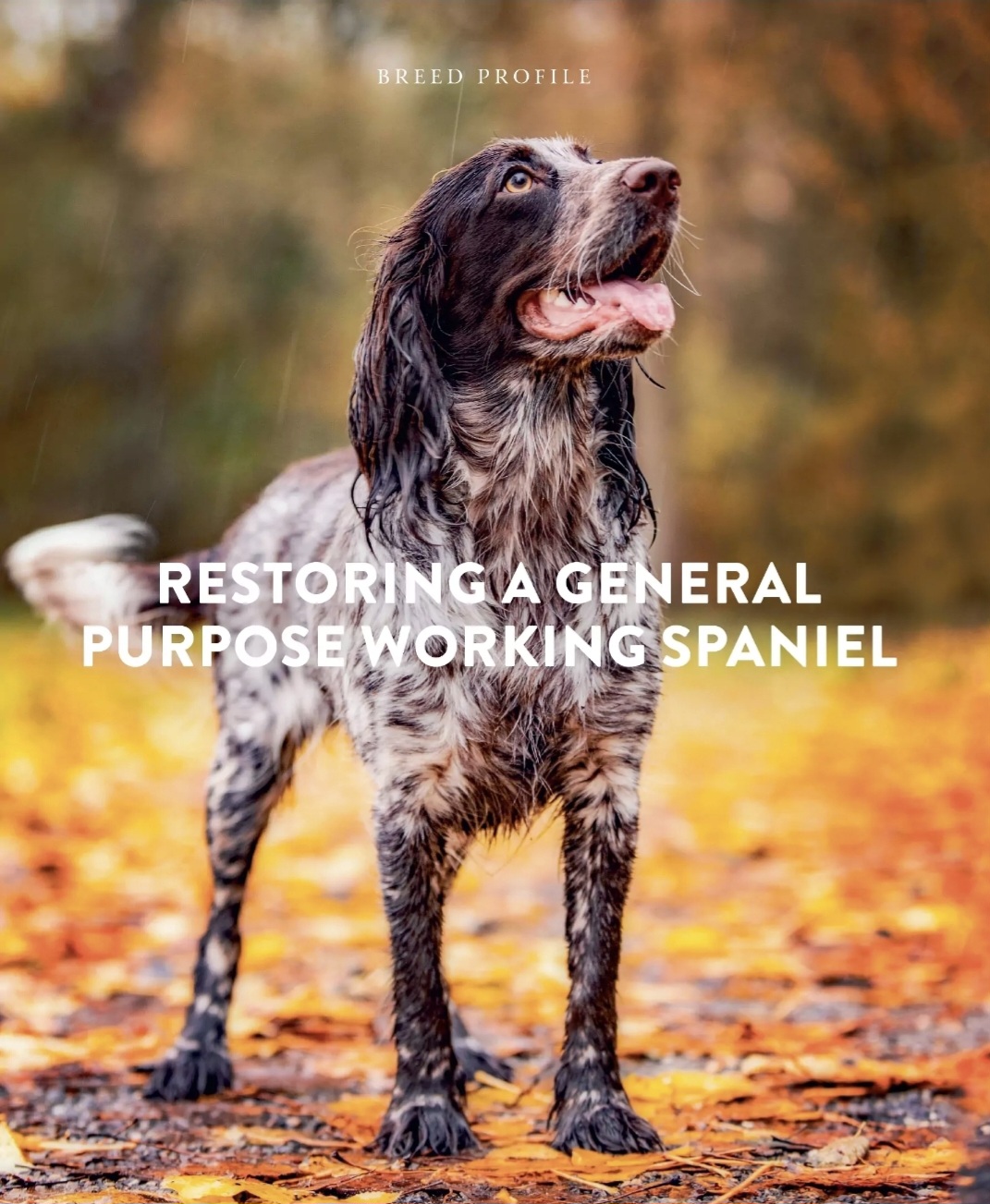
Restoring a general-purpose working spaniel
Our profile of the Polish Hunting Spaniel for Gundog Journal (January 2026): where the breed came from, how it works, and what makes it distinct. Lucky for us, they chose a photo of Grace as the leading image.
Read the full profile (PDF) ↗The Polish Hunting Spaniel is a medium-sized gundog developed in Poland to flush and retrieve game across mixed terrain, on land and in water. It works at a calm, deliberate pace that has earned it the nickname of the thinking spaniel. It covers ground steadily, reads the wind and keeps quiet contact with its handler, and it is slower and more measured than people tend to expect of a spaniel.
It is a general-purpose working spaniel, close to the all-round type that existed before British spaniels divided into separate show and field forms. One dog is expected to search, flush, retrieve and recover wounded game in the same day.
The modern breed was reconstructed from the remnants of Poland's Borderland spaniels, most of which were lost during the Second World War. The programme began in the late 1980s, and the breed is now worked across northern and central Europe. There is more on where it came from on the breed history page.
In build it is a medium spaniel with a rectangular outline and a little more leg than the familiar British breeds, which gives it reach in cover and an easy, economical stride. The coat is straight or lightly wavy over a dense, water-resistant undercoat, most often chocolate roan with a white tail tip. The breed standard page explains what that structure is for.
At work it is composed and thoughtful; at home it settles once its body and mind have had something to do. It bonds closely to its people and is often reserved with strangers, though rarely sharp. What these dogs are like to live with is its own subject, on the temperament and character page.
Its scenting ability and methodical problem-solving also carry it well beyond the field, into mantrailing, utility tracking and detection; some dogs now work in police detection and human-identification teams across Europe. It does not need a shooting home, but it does need real work for its nose and mind.
It is a young breed and still a small population. From the start the community set out to avoid the early split between show and working lines seen in many older breeds: many conformation winners also hold field qualifications, and breeding dogs must meet both structural and working criteria. The Polish Kennel Club granted provisional recognition in 2016, and the breed continues to expand under organised health and pedigree oversight.